


Introduction: The Hidden Revenue Leak Most US Sellers Ignore
If you’re selling on Amazon, Walmart Marketplace, or eBay in the US and still adjusting prices manually, this needs to be said plainly:
You’re losing money every single day, quietly.
Not because your product isn’t good. Not because demand isn’t there.
But because modern marketplaces move faster than humans ever can.
While you’re checking competitor prices once or twice a day, automated sellers are repricing every few minutes. That gap is where Buy Boxes are lost, conversions drop, and revenue slips away without showing up clearly in reports.
Manual repricing doesn’t look expensive. But over a month, It adds up to thousands of dollars in missed opportunity.
What Is Manual Repricing (and Why Sellers Still Use It)?
Manual repricing means you adjust product prices yourself—one listing at a time.
How Most US Sellers Do It
- Log into Seller Central or Walmart Seller Center
- Search competitor listings
- Update prices manually
- Track margins in spreadsheets
- Repeat daily (or when things go wrong)
It feels controlled. It feels careful. But it’s also slow—and speed is everything in ecommerce.
Why It Feels “Fine” in the Beginning
- Fewer SKUs
- Less competition
- Lower ad spend pressure
But as soon as competition increases, manual pricing becomes a liability instead of a safeguard.
The Real Cost of Manual Repricing (It’s Not Just Time)
Most sellers underestimate the damage because it doesn’t show up as a single line item.
Lost Buy Box Time = Lost Revenue
On Amazon US, price is one of the strongest Buy Box factors.
If your price isn’t competitive at the exact moment:
- Your ads underperform
- Your listing visibility drops
- Someone else gets the sale
Manual repricing means you’re always reacting late.
You Miss Real-Time Market Shifts
Competitors:
- Run flash discounts
- Adjust prices based on inventory
- React instantly using automation
Manual sellers? They find out after the sales window has passed.
Overpricing and Underpricing Both Hurt
- Overpricing = no conversions
- Underpricing = sales with weak margins
Manual repricing causes both—often in the same week.
Why Marketplaces Move Too Fast for Humans
Amazon, Walmart & eBay Are Algorithm-Driven
Pricing decisions are influenced by:
- Demand spikes
- Competitor behavior
- Fulfillment method (FBA, WFS, FBM)
- Inventory availability
Algorithms adjust in real time. Humans don’t.
You’re Competing Against Automation
Most top sellers in the US already use repricing tools. If you’re manual, you’re playing a modern game with outdated tools.
How Much Money Sellers Lose Every Month
Let’s be realistic.
Small Sellers
- $300–$1,000/month lost
- Mostly from missed Buy Box hours and poor ad efficiency
Mid-Size Sellers
- $2,000–$10,000/month
- Slower inventory movement + margin leaks
High-Volume Sellers
- $20,000+/month
- Running high revenue but leaving profit on the table
Manual repricing doesn’t scale. Losses do.
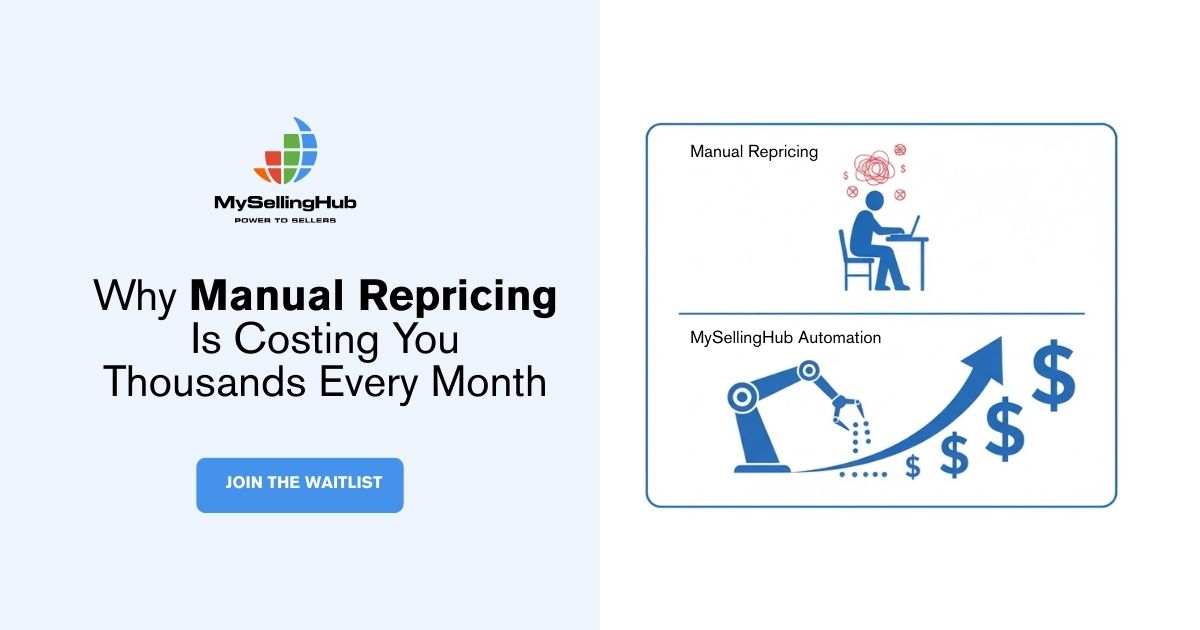
Manual Repricing vs Pricing Automation
Speed
- Manual: Hours or days
- Automation: Seconds
Accuracy
- Manual: Based on spot checks
- Automation: Based on live competitor data
Scalability
- Manual: Breaks after 20–30 SKUs
- Automation: Handles hundreds or thousands easily
The “I’ll Fix Prices Later” Trap
This mindset costs sellers more than bad ads.
Every hour your price is outdated:
- You lose conversion momentum
- Your Buy Box share drops
- Amazon’s algorithm deprioritizes your listing
Later is too late in ecommerce.
What Pricing Automation Actually Does (In Simple Terms)
Rule-Based Repricing
You set the rules:
- Minimum price
- Maximum price
- Target margin
The system follows them consistently.
Competitor Monitoring
Automated repricing reacts when competitors:
- Raise or lower prices
- Lose stock
- Switch fulfillment methods
Margin Protection
Good automation tools don’t blindly undercut. They optimize for profit, not just price.
Common Myths Sellers Still Believe
“Automation Will Start a Price War”
Bad rules cause price wars, not automation.
“It’s Only for Big Brands”
Small sellers benefit the most because every sale matters more.
Why Smart Sellers Automate Early
Because they understand this equation:
Speed + Accuracy + Control = Profit
Manual repricing fails all three.
How Manual Repricing Hurts Buy Box and Rankings
Inconsistent pricing:
- Reduces Buy Box eligibility
- Weakens ad performance
- Slows organic ranking growth
Automation keeps listings competitive without panic discounts.
Manual Repricing Also Burns Out Teams
Pricing manually:
- Wastes hours every week
- Causes mistakes under pressure
- Pulls focus from growth, ads, and expansion
Automation removes repetitive work and mental fatigue.
How Pricing Automation Enables Confident Scaling
With automation, you can:
- Add more SKUs
- Expand to Walmart or eBay
- Maintain margins as volume grows
Without hiring more people.
Conclusion: Stop Losing Money You’ve Already Earned
Manual repricing isn’t just outdated it’s expensive.
Every delayed price update. Every missed Buy Box. Every underpriced sale.
That’s revenue you earned and quietly gave away.
Automation doesn’t remove control. It gives you better control, backed by data and speed.
The real question isn’t should you automate pricing.
It’s how much longer you’re okay losing thousands every month.
Read more about repricing automation: https://www.mysellinghub.com/blog/what-is-repricing-automation-why-sellers-need-it


